
October 5, 2026
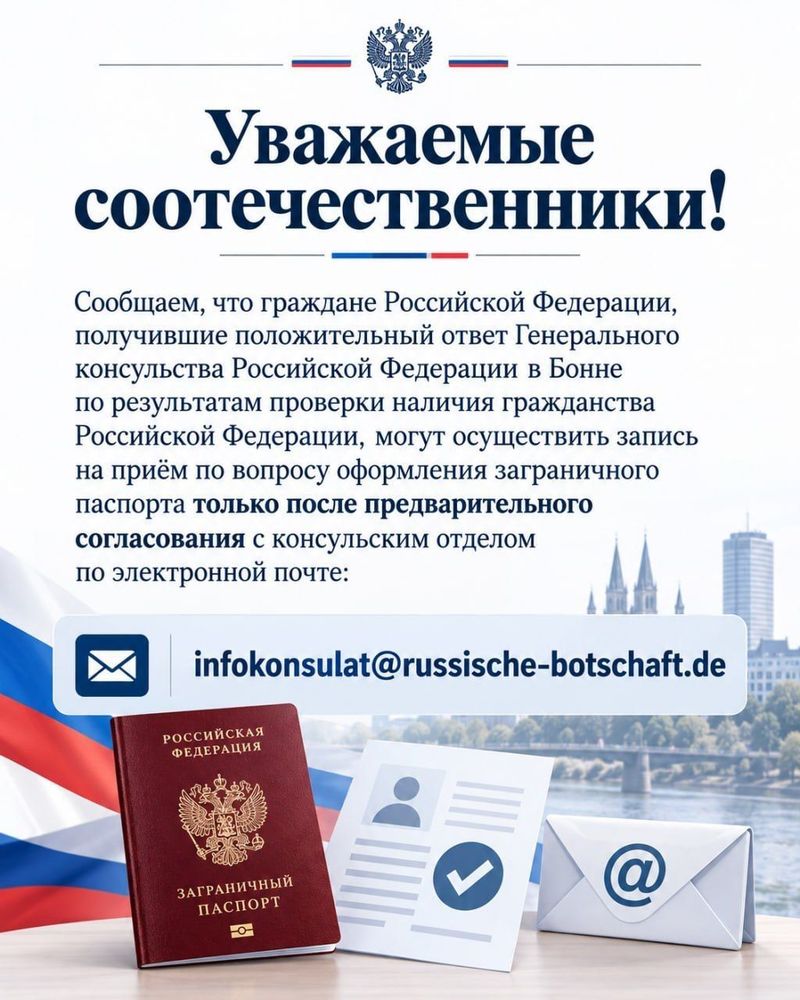
Issuing a passport after verification of Russian citizenship in Bonn
2 min
"Invisible Millions" of Resettlers Become a Topic of Discussion for Sociologists in Russia
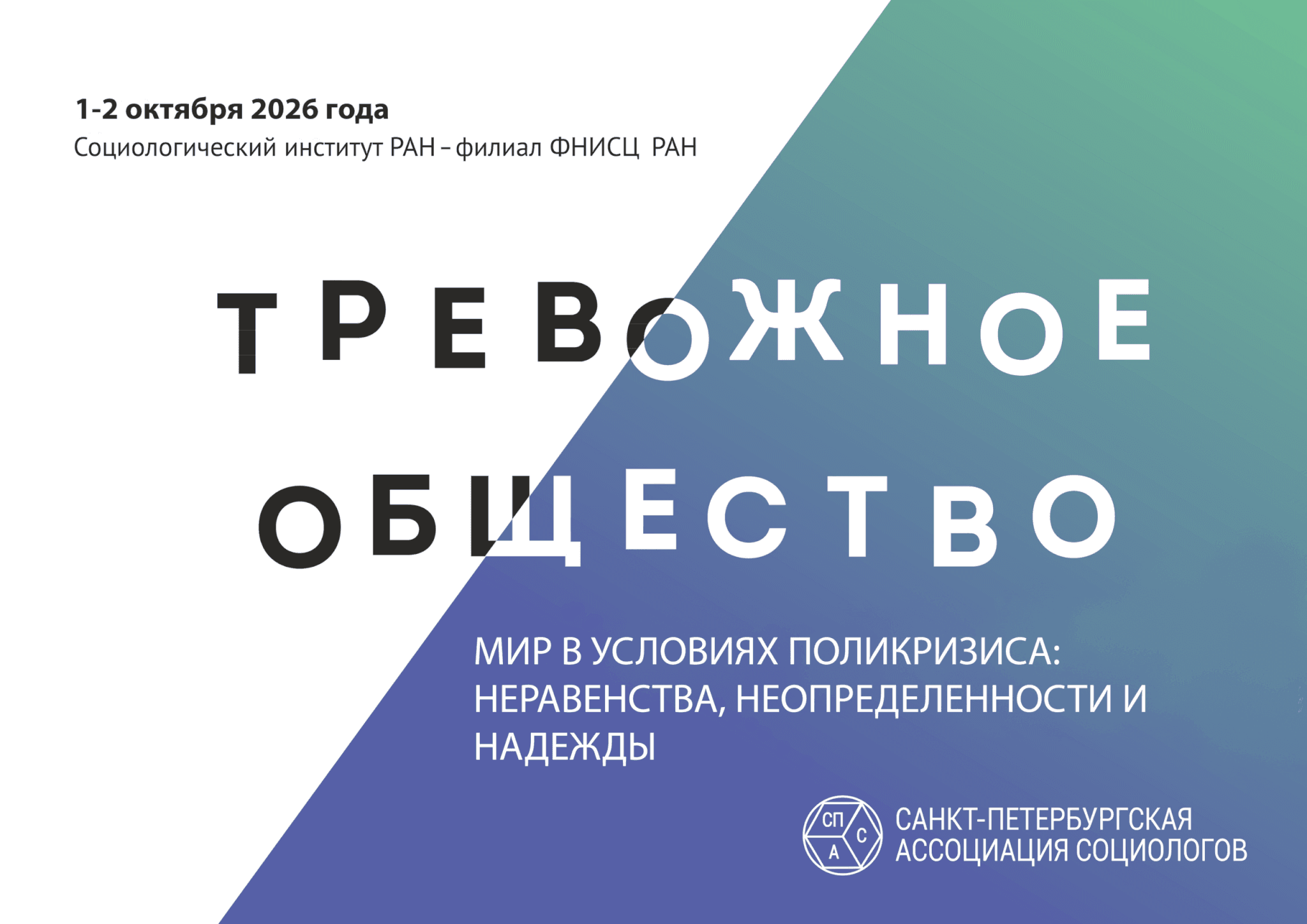
Russian sociologists discussed the attractiveness of Russia as a country for resettlement and the values our country promotes in the world at the "Invisible Millions" section, held at the annual sociological conference "Anxious Society — 5" in St. Petersburg.
On October 1 and 2, a large-scale sociological forum was held in the northern capital, organized by the St. Petersburg Association of Sociologists and the Sociological Institute of the Russian Academy of Sciences, a branch of the Federal Research Sociological Center of the RAS.
The main focus of the participants was the situation of polycrisis, when social, political, and economic fault lines not only coincide but also reinforce each other, creating complex and multilayered problems for modern society.
The discussion examined various forms of inequality and their impact on social relations and people's everyday lives. Issues of social justice and mechanisms for overcoming emerging injustices were discussed. The causes and consequences of anxiety's transformation from a situational mood into a persistent state that structures everyday life and social interactions were also considered. A key aspect of the discussion was the search for resources and opportunities to resist polycrisis and find ways out of difficult situations.
The expert council of the project "Path Home" organized and held its own section, which was devoted to issues of value-based migration to Russia and the lack of comprehensive scientific research on various groups of resettlers and their life trajectories.
Over two decades, the State Program for Assistance to the Voluntary Resettlement of Compatriots to Russia has brought about 1.3 million people to the country. However, according to the autonomous non-profit organization "Path Home," there are another 4–5 independent resettlers for every participant of this program. In addition, over the past ten years, about 2 million people from Ukraine have obtained Russian citizenship. As a result, today the number of people with a migration past in the country is comparable to the population of a large region.
The organizers note that resettlers remain "invisible" to the scientific community. They exist as generalized statistical data, but not as social actors with their own life strategies, problems, resources, and hopes. To date, there is no comprehensive socio-demographic and socio-psychological portrait of this group. Despite the scale of the phenomenon, scholars do not have a systematic answer to key questions: who these people are, what their social status is, how well they are integrated into society, what contribution they make to the economy, and how psychologically resilient they are.
Participants in the discussion concluded that distinguishing between the concepts of "migrant," "resettler," and "repatriate" is a practical necessity. Without a clear division of these categories, it is impossible to develop effective social policy or properly study these groups. Integration remains their main problem. The lack of institutional mechanisms leads to resettlers forming diasporas and clan-like structures, which can cause social tension.
This section was the second attempt within a year to draw scientists' attention to this topic (the first took place at the XVI Grushin Conference in April). The organizers hope that this discussion will set a direction for future scientific work.
Publication date: October 7, 2026
October 5, 2026
October 5, 2026
October 2, 2026
October 2, 2026
October 1, 2026

September 29, 2026
September 29, 2026
September 29, 2026
September 29, 2026
September 28, 2026
September 27, 2026

September 25, 2026
September 25, 2026

September 24, 2026

September 23, 2026
September 23, 2026
September 21, 2026
September 20, 2026

September 17, 2026
September 17, 2026
September 17, 2026
September 16, 2026
September 16, 2026