
October 13, 2026
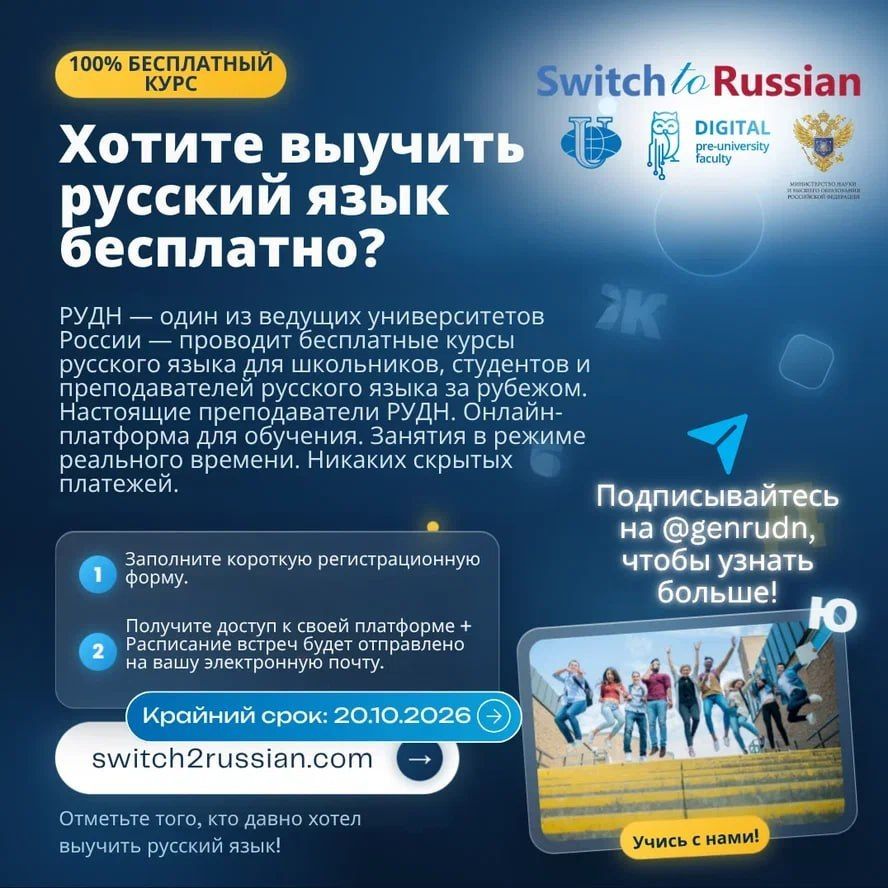
Learn Russian for free from home?
1 min

On February 6, 2026, the International Scientific and Practical Conference “My Homeland is Russia: A View of Russia’s Image from Abroad and a Response to It” was held at the Russian Abroad House in Moscow. It was organized by the Path Home Autonomous Nonprofit Organization and the Moscow Art and Industrial Institute (MHPI), with the support of Rossotrudnichestvo.
The conference brought together scholars and public figures from Russia, Belarus, Azerbaijan, and Egypt, as well as representatives of academic communities from Moldova, Romania, Greece, Bulgaria, Turkmenistan, and Ethiopia.
Opening remarks were delivered by government officials and key figures responsible for developing and implementing policy concerning compatriots:
A. G. Nechaev — leader of the New People faction in the State Duma and Chairman of the Supervisory Board of the Path Home Autonomous Nonprofit Organization;
I. Yu. Chaika — Deputy Head of Rossotrudnichestvo (Federal Agency for the Commonwealth of Independent States Affairs, Compatriots Living Abroad, and International Humanitarian Cooperation);
M. V. Butina — State Duma deputy, member of the State Duma Committee on International Affairs;
E. V. Afanasyeva — Senator of the Russian Federation, Deputy Chair of the Federation Council Committee on International Affairs;
T. A. Chikaeva — Vice-Rector for Research at the Moscow Art and Industrial Institute, Associate Professor, Candidate of Philological Sciences.
The conference was organized as a plenary session and thematic sections: “Historical and Philosophical Understanding of Russia’s Image Abroad and a Response to It” and “Theory and Practice of Shaping and Updating Russia’s Image among Compatriots Abroad and Residents of Foreign Countries.” The papers presented addressed the philosophical and theoretical, historical and cultural, and practice-oriented aspects of shaping Russia’s image abroad.
The conference was held at a time when Russia’s image in global consciousness is undergoing profound transformations driven by geopolitical upheavals, sanctions pressure, information warfare, and manifestations of Russophobia. At the same time, a sustained decline has been recorded in the pace of compatriot resettlement under the State Program: from 78.5 thousand people in 2021 to 21.5 thousand people in 2025 (according to an interim estimate by the Ministry of Internal Affairs). This points to the need to review the system for engaging with compatriots in order to encourage resettlement, taking account of today’s realities.
Conference participants noted that the “cultural melting pot” model proposed by Western leaders had proved untenable, and that a new model was needed for a unified yet diverse world—one that Russia could develop and champion thanks to its historical experience, openness, and the spirituality of Russian culture.
MAIN THEMATIC AREAS AND KEY FINDINGS
1. Philosophical and theoretical foundations: the concepts of “Homeland,” “Fatherland,” and “Compatriot”
In her plenary paper, T. A. Chikaeva (Candidate of Philological Sciences, Vice-Rector for Research at MHPI) presented scholarly and philosophical definitions of the key concepts:
— Homeland was defined as a spiritual substance, a primordial source and the source of existence; the meanings and values inherent in Russian culture and embodied both in Russia and beyond its borders. Homeland is the foundation of a social subject’s system of values and goals.
— Fatherland is the union of Homeland as a spiritual foundation with the creative potential of social subjects, directed toward organizing and managing shared life on the basis of values inherited from previous generations, as well as improving those values in light of prevailing conditions.
— A compatriot is a subject who, through thought, word, and deed, contributes to affirming the values of national culture as a basis for pursuing a distinctive path toward the ideal of a just world. T. A. Chikaeva emphasized that one can be a compatriot without holding citizenship, and that the concepts of “Homeland,” “Fatherland,” and “State” must not be conflated.
Developing this theme, V. V. Filippova (Sphere Center for Social Architecture) presented a concept of the evolution of identity in a polycentric world—from compatriot to “super-compatriot Earthling.” Russia was described as a cultural and spiritual civilization that emphasizes the importance of truth, justice, and the common good. The “World-Organism” model was proposed, in which each civilization acts as a unique organ that sustains the global organism.
In her plenary paper, A. A. Shelyapina (Path Home Autonomous Nonprofit Organization) highlighted contradictions in the axiological relationship between the concepts of “compatriot” and “country-civilization”: in the former case, belonging to the compatriot community is determined primarily by territorial and kinship ties, while affiliation with a country-civilization is determined by an individual’s civilizational choice. It was shown that including the term “compatriot” at the core of the concept of “country-civilization” makes it possible to significantly broaden the range of people from different countries involved in resettling to Russia, including those with no family ties to Russia or history of residence there.
2. Historical and civilizational prerequisites
In his paper on the geographical and historical prerequisites for the formation of Russian civilization, K. V. Podyachev (Candidate of Political Sciences, Leading Research Fellow at the Federal Center of Theoretical and Applied Sociology of the Russian Academy of Sciences, Associate Professor at GAUGN) identified the main shaping factors: climate, resources (including territory), demography, external threats, and Orthodoxy. He formulated the principles of the Russian tradition of development: the inseparability of scientific and technological development from personal development; the priority of the Homeland’s interests over private interests; an understanding of work as creativity and personal dedication as the basis of positive development; and recognition of selflessness and self-sacrifice as moral norms.
A. K. Paptsova (Candidate of Philological Sciences, Associate Professor at MHPI) analyzed the factors and trends in the evolution of Russia’s image in Moldova, showing that Russia has historically been present in Moldovan cultural space as a significant ally. The most harmonious image of Russia is reflected in the holistic image of Moldova’s own past, whereas within the Romanian cultural project Russia has occupied the position of the “Other” since the 20th century.
3. The image of Russia in literature and art
N. B. Litvinova (Candidate of Philological Sciences, Associate Professor at the M. Matusovsky Luhansk State Academy of Culture and Arts) explored the values associated with the image of the Homeland-Russia in works by Russian émigré writers. Drawing on the works of I. Bunin, G. Adamovich, and I. Severyanin, she showed that classical literature expands the emotional and imaginative understanding of the Homeland, and that its system of core values includes memory, home, family, universal harmony, and cultural richness.
4. Public diplomacy tools: international projects
E. V. Averkieva (Autonomous Nonprofit Organization “Innovation Center for the Development and Upbringing of Children and Youth,” Senior Lecturer at Moscow Pedagogical State University) presented positive results from the international project “Tell the World About Your Homeland” (2018–2025). Of the foreign participants surveyed, 93.2% said they wanted to visit Russia and make Russian friends, while 92.7% reported becoming interested in studying the Russian language, history, and culture.
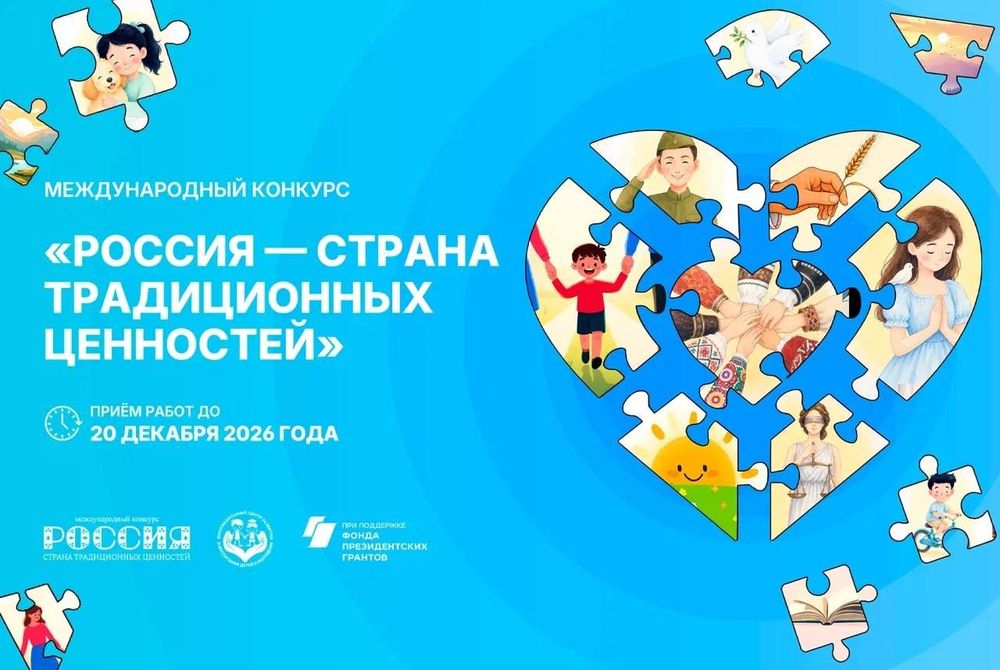
Love of the Homeland was recognized as a unifying theme for people from different countries, while traditional universal human values were identified as a promising focus for international humanitarian initiatives. The International Competition “Russia: A Country of Traditional Values” is planned for 2026–2027.
5. Moving from a static to a dynamic image of Russia
I. T. Budrina (Doctor of Sociology, Association of Compatriots in Romania “OUR WORLD”) made the case for moving from a static to a dynamic perception of Russia. The static image was based on enduring symbols and archetypes, limiting the possibility of flexible interpretations of the present day. A dynamic representation entails a system of images that change over time and space, depend on context, and look not only to the past but also to the present and future.
A practical confirmation of the speaker’s points was the “Soul of Russia” photo exhibition in Romania (51 works from V. Razumov’s “Chronicle of the Russian Country Estate” collection), which helped create an alternative view of Russia among Romanian audiences. Visitors’ reactions included: “Russia looks calm and very humane here,” and “These photographs make you forget about politics and think about how much more we have in common than it seems.”
6. Technological diplomacy: the experience of Egypt
O. V. Hassab Elnabi (Russian House in Cairo) analyzed the effectiveness of methods for shaping a positive image of Russia in Egypt through practice-oriented educational initiatives:
— Case 1: Russian engineering school at the Botanik Center (Sheikh Zayed, Egypt);
— Case 2: Robotics and Innovative Educational Technologies Week (November 16–23, Cairo, Alexandria, Aswan).
These cases led to the conclusion that personal experience of participating in engineering projects creates a more lasting positive image of Russia than traditional forms of presentation. The need was substantiated to convert Russian Houses abroad into centers for engineering and technology education and STEM diplomacy.
7. Prospects for cooperation with Ethiopia
Tsegay Gidey Gebreanenia (Ethiopia) presented a perspective on perceptions of Russia in Ethiopia, based on the historical role of our country as a center of high-quality education and scientific diplomacy. Growing interest in the Russian language and culture among Ethiopian students and professionals was noted. The spiritual and cultural ties between the Ethiopian and Russian Orthodox Churches were described as a solid foundation for mutual respect and understanding. Practical recommendations included establishing Russian language centers, using digital educational platforms, organizing cultural festivals, and developing dual-degree programs.
8. Cultural code and the creative potential of compatriots
L. V. Bogdanova (Candidate of Psychological Sciences, lecturer at RANEPA, writer) explored the methodological foundations of compatriots’ creative potential through the lens of cultural code. The author identified eight dimensions of uniqueness: intellectual; ethical and values-based; aesthetic and cultural; narrative; creative; social; functional; and traditions and heritage. The staging of “The Snow Queen” on Corfu demonstrated how creative projects by compatriots abroad convey the Russian cultural code across all eight dimensions.
Conference participants:
1) conducted a comprehensive, evidence-based assessment of the images of Russia conveyed to compatriots abroad;
2) discussed tools and methods for shaping and updating images that contribute to the steady development and promotion of Russian science and culture, and the preservation and strengthening of traditional values;
3) analyzed practice-oriented technologies for working with compatriots living abroad, as well as with foreign nationals;
4) expressed their intention to continue research into different approaches to describing the modern concept of “compatriot”;
5) supported the Organizing Committee’s proposal to launch a permanent academic seminar on shaping an image of Russia that reflects its current technological standing, international status, and perception as a country-civilization;
6) called on all interested parties to take a more active role in building the image of a renewing Russia and conveying it through people’s diplomacy, state diplomatic institutions, and research, industrial, and creative groups abroad.
Conference participants proposed the following mechanisms for addressing the issues discussed:
In the area of image-building:
— redirect the choice of visual design and semantic content of projects away from a static image toward a dynamic image of Russia, moving away from distinctive brands long known abroad and toward universally understandable symbols of values;
— support the shaping of an image of contemporary Russia through art and literature, presenting works to audiences abroad;
— take the characteristics of local national or regional audiences into account when implementing scalable projects;
— use visual images of everyday life, nature, and cultural space as mediators of intercultural dialogue that reduce alienation.
In science, education, and technology:
— substantially expand the scientific and technological component when planning and organizing events abroad;
— propose that Rossotrudnichestvo establish pilot Russian Houses conceived as creative technology centers, with permanent robotics and 3D modeling labs, regular hackathons, project intensives, and VR presentations of Russian universities;
— develop practice-oriented educational initiatives as tools of public and technological diplomacy (STEM diplomacy);
— expand academic exchange, joint research, and dual-degree programs with universities in partner countries;
— establish Russian language centers and use digital educational platforms to expand audience reach.
In work with compatriots:
— continue efforts to improve mechanisms for resettlement to Russia and the conditions of the State Resettlement Program;
— support the creative potential of compatriots abroad, drawing on the Russian cultural code;
— promote the consolidation of a civilizational diaspora—bringing together communities that share the values of the Russian World, regardless of where they live;
— develop people’s (public) diplomacy tools, including international competitions, photo exhibitions, cultural festivals, and theatrical productions.
In education and methodology:
— continue developing teaching materials for a Russian schools’ module on the history of Russians abroad;
— introduce deductive-dialectical methods and metasystem analysis to prepare participants for global dialogue;
— form a management vanguard: a new type of personnel capable of embodying values and interacting effectively in the international arena.
In information policy:
— provide greater support to bloggers with large foreign audiences by organizing press tours to regions of the Russian Federation;
— promote the success stories of international graduates of Russian universities as an effective tool for shaping a positive image;
— use the digital environment and social networks to create new forms of connection between Russia and its diaspora.
Conference participants expressed support for holding the event annually, with scholars from countries around the world. The following areas of future work were identified:
— launch a permanent academic seminar on shaping Russia’s image;
— support the holding of the International Competition “Russia: A Country of Traditional Values” in 2026/27;
— seek and create platforms for intercivilizational dialogue based on the principles of harmony and mutual respect;
— continue research into the meaning of the concept “compatriot” and its relationship with the understanding of Russia as a country-civilization, in terms of both values and practical application.


Publication date: February 17, 2026
October 13, 2026
October 7, 2026
October 5, 2026
October 5, 2026
October 2, 2026
October 2, 2026
October 1, 2026

September 29, 2026
September 29, 2026
September 29, 2026
September 29, 2026
September 28, 2026
September 27, 2026

September 25, 2026
September 25, 2026
September 24, 2026

September 23, 2026
September 23, 2026
September 21, 2026
September 20, 2026
September 17, 2026
September 17, 2026
September 17, 2026
September 16, 2026
